
Painting on wood with acrylic paint is a bit like cooking pasta: in theory, it seems simple… until everything warps, cracks, soaks up the paint like a giant sponge, or ends up with weird marks 😅

And yet, painting with acrylics on wood is a wonderful technique. Accessible, versatile, quick-drying, and virtually odorless, it allows you to create everything from modern abstract works to rustic decorations, customized furniture, and artistic panels.
The problem? Many beginners jump right in without any preparation… and wood isn’t always forgiving.
In this comprehensive article, we’ll cover:
- Which wood should I choose?
- how to properly prepare the surface,
- what mistakes to avoid,
- How can I make the paint last longer?
- How to protect your creation,
- and, above all, how to achieve a truly professional result.
Get comfortable, grab your paintbrushes… and let’s work together to avoid that infamous “abandoned paint palette in the rain” look 😄
Why paint on wood with acrylic paint?
Acrylic paint has many advantages when used on wood.
The Major Benefits of Acrylic 🖌️
| Benefit | Why It’s Useful |
|---|---|
| Quick-drying | Allows you to work quickly |
| Low odor | More comfortable indoors |
| Water Cleaning | No solvents needed |
| Good hook | On many platforms |
| Versatility | Abstract, decorative art, illustration, furniture… |
| Affordable price | Perfect for beginners |

Wood, for its part, provides:
- a warm texture,
- a natural side,
- a good level of rigidity,
- excellent durability.
So the two of them work extremely well together.
What type of wood should you choose? 🪵
Not all types of wood react the same way.
And some platforms are much easier for beginners.
The Best Wood Surfaces for Acrylic Paint
MDF (medium-density fiberboard)
MDF is often THE ideal choice.
Why?
- smooth surface,
- not much texture,
- stable,
- inexpensive,
- easy to paint.
It’s perfect for:
- the abstract,
- large formats,
- decorative panels.

Plywood
It’s also widely used.
It is lighter than MDF but can sometimes be slightly uneven.
Warning:
- Some inexpensive plates may warp.
Solid wood
Visually stunning… but not as “lively.”
Solid wood can:
- work,
- inflate,
- to retract,
- to crack.
It’s not necessarily the easiest way to get started.
Wooden pallets
Very trendy for a rustic look 🎨
But:
- often irregular,
- sometimes greasy,
- sometimes damp,
- sometimes chemically treated.
So be careful.
Do you need to prep the wood before painting? (Spoiler: YES 😅)
This is probably the most important step.
Many people think:
“I’ll just paint right on top of it—that’ll be fine.”
Sometimes, yes…
But often:
- The paint absorbs a lot,
- the colors become dull,
- Wood absorbs everything,
- The surface becomes rough.
Step 1: Sand the wood 🧽
Sanding allows you to:
- to even out the surface,
- to improve the hook,
- to prevent certain irregularities.
Which grain should I use?
| Location | Recommended grain size |
|---|---|
| Very rough, untreated wood | 80 to 120 |
| Standard wood | 120 to 180 |
| Soft finish | 220 |
No need to turn your workshop into a cloud of sawdust either 😄
Light sanding is often enough.
Step 2: Dust
Very important.
Otherwise:
- dust in the paint,
- undesirable reliefs,
- poor traction.
A slightly damp cloth works very well.
Step 3: Apply a primer or gesso 🎨
This is where we enter the “game-changer” stage.
Gesso allows you to:
- to limit absorption,
- to achieve more vibrant colors,
- to improve traction,
- to avoid wasting paint.

How many diapers?
Generally:
- 1 to 3 thin coats.
Lightly sand between coats if you want a very smooth finish.

Can you paint directly on wood without gesso?
Yes…
But the result will often be:
- more matte,
- more absorbed,
- less uniform.
Sometimes this may be intentional.
In some abstract works, this raw quality can be visually very interesting ✨
Which acrylic paint should I use? 🎨
Not all acrylic paints are created equal.
Academic vs. Professional
| Product Line | Benefits | Disadvantages |
|---|---|---|
| Study | Inexpensive | Less pigmented |
| Professional | Vibrant colors | More expensive |
For decorative wood:
- A good study painting is often enough.
For a lasting work of art:
- A paint with a higher pigment content is preferable.

Should the paint be thinned?
Yeah… but not too much 😄
Too much water:
- weakens the acrylic film,
- reduces traction,
- creates traces.
In general:
- slight dilution at most.
See article: How to Thin Acrylic Paint
Acrylic Painting Techniques on Wood 🖌️
The opaque finish
Traditional technique.
We completely cover the surface.
Commonly used for:
- decor,
- modern abstract,
- illustration.
Transparent rendering
Very interesting on wood.
The grain remains visible.
This gives:
- character,
- a natural look,
- a warm atmosphere.

Dry brushing
A very popular technique.
We use:
- very little paint,
- almost dry brush.
Effect:
- texture,
- aging,
- vintage style.
Textures
Acrylic paint loves textures 😍
You can use:
- knives,
- gels,
- structural pastes,
- sand,
- fibers.
For fans of abstract art, wood provides an extremely pleasant medium for this type of work.

The Most Common Mistakes 😅
1. Painting on damp wood
Potential disaster.
Damp wood can:
- inflate,
- to crack,
- cause the paint to blister.
2. Skip the sanding
Result:
- irregular surface,
- bad hook,
- made it less clean.
3. Adding too much water
The classic beginner’s mistake.
Wood naturally absorbs a lot anyway.
4. Neglecting final protection
And then…
- stripes,
- humidity,
- yellowing,
- wear and tear.
It’s a shame after all those hours of work.
How do you protect acrylic paint on wood? 🛡️
Very important if:
- the work is tampered with,
- exposed,
- sold,
- used as decoration.
Acrylic varnish
The simplest solution.

Matte finish
Appearance:
- sweet,
- modern,
- elegant.
Highly regarded in the realm of abstract art.
Satin finish
The perfect compromise:
- soft light,
- without too much glare.
Glossy finish
Very vibrant colors ✨
But:
- more reflections.
How many coats of varnish?
In general:
- 2 to 3 thin coats.
As always:
- Let it dry thoroughly between coats.
Can you paint wooden furniture with acrylic paint? 🪑
Yes, absolutely.
But be careful:
- Furniture is subject to friction,
- impacts,
- moisture.
Therefore, we must:
- thorough preparation,
- a durable varnish.
Does acrylic paint last on wood?
Yes, very good, in fact.
Provided that:
- provided that the surface is prepared,
- as long as the painting is done correctly,
- that the final protection is appropriate.
Some acrylic paintings on wood last for decades.
Acrylic painting on wood and abstraction 🎨
Wood is a fascinating medium for abstract painting.
Why?
Because it provides:
- a natural texture,
- a pleasant firmness,
- a warm look,
- a presence that is very different from that of the web.
Many contemporary artists today use:
- MDF panels,
- plywood,
- recycled wood.
The result can be extremely modern.
If you’re new to abstract art, you can also explore the concepts of composition and visual balance to avoid creating “flat” or confusing paintings 😄
You’ll also find plenty of resources and exercises on Cardiao to help you relax and reduce creative stress during your painting sessions.
Which brush should I use? 🖌️
| Brush Type | Usage |
|---|---|
| Main Course | Backgrounds and Solid Colors |
| Round | Details |
| Fan | Textural Effects |
| Spalter | Supermarkets |
| Knife | Matter and Abstraction |
Since wood is stiffer than canvas, some artists prefer to use brushes that are a little firmer.
Can we use a roller?
Yes.
Very useful for:
- large solid areas,
- funds,
- furniture.
Be careful, though:
- following the tracks,
- with bubbles.
How can you avoid brush strokes?
A few simple tips:
- slightly runny paint,
- thin layers,
- high-quality brushes,
- work quickly,
- Avoid ironing over and over again.
Because otherwise…
we end up with a “wall repainted on a Sunday night at 10 p.m.” look 😅
Should the edges of the panel be painted?
It depends on the style you’re going for.
Painted edges
Appearance:
- modern,
- gallery.
Visible wood edges
Appearance:
- natural,
- warm,
- handcrafted.
Both work very well.
Can wood warp?
Yes.
Most importantly:
- If the panel is thin,
- If the humidity varies greatly,
- if only one side is painted.
Tip:
- Painting the back of the panel as well can help balance the stresses.
Can you mix acrylics with other techniques?
Yes 🎨
Very often, in fact.
You can embed:
- ink,
- pastel,
- collage,
- charcoal,
- acrylic markers,
- aerosol can.
Wood lends itself very well to mixed media.
Tips for Getting Started Without Stress 😌
Most importantly:
- experiment,
- test,
- accept accidents.
Because, especially in abstract painting…
“mistakes” sometimes turn out to be the best ideas 😄
And honestly:
even experienced artists sometimes spend 20 minutes looking at a painting, wondering:
“Absolute genius… or a total disaster?”
That’s normal 😂
Conclusion: Painting with acrylics on wood is an incredible creative outlet 🎨🪵
Acrylic painting on wood allows you to create:
- modern works,
- unique decorations,
- highly expressive abstract paintings,
- custom furniture.
Starring:
- a good support system,
- proper preparation,
- a little patience,
You can achieve truly beautiful results.
And most importantly:
—don’t wait until you’re “ready.”
The best way to learn…
is still to paint 😄
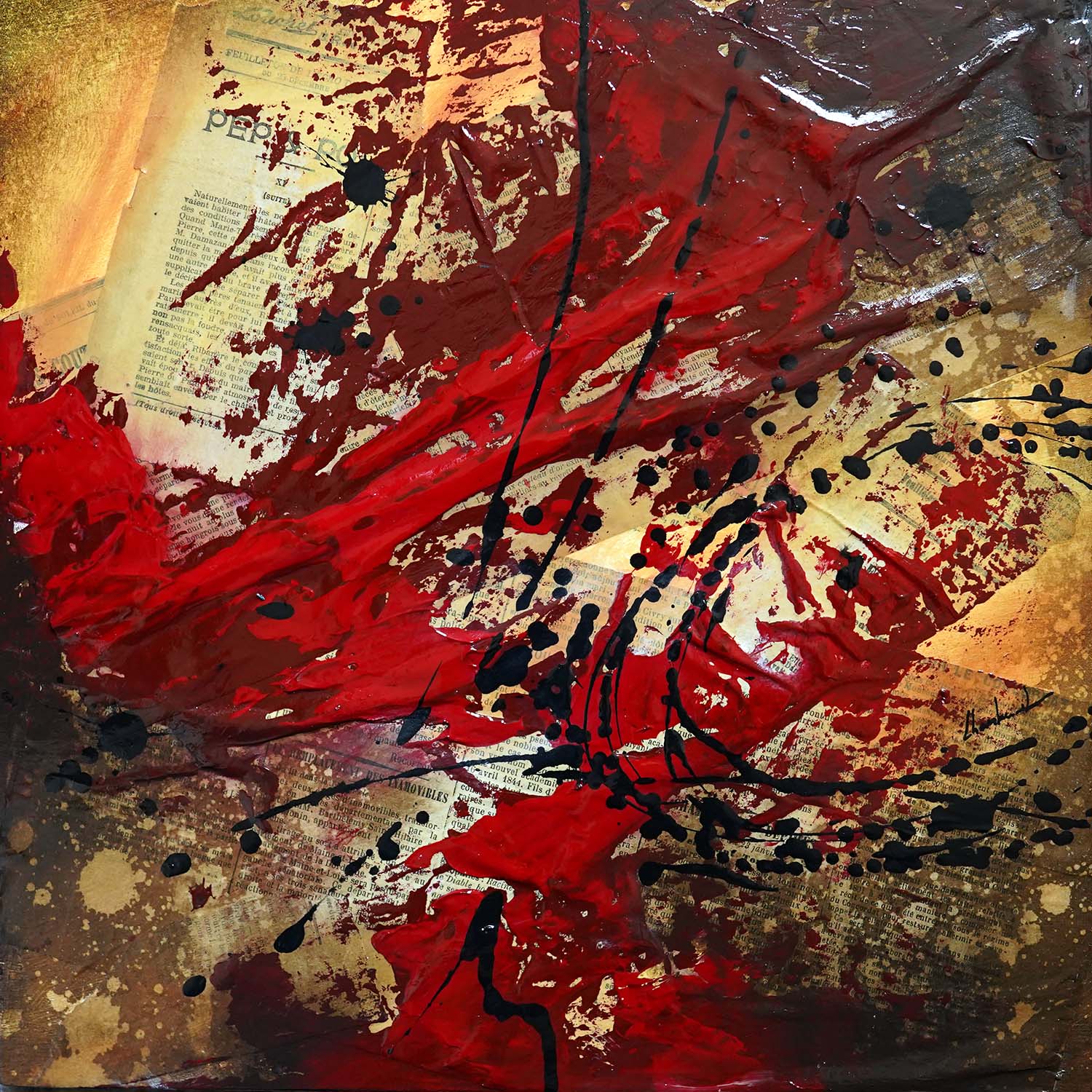
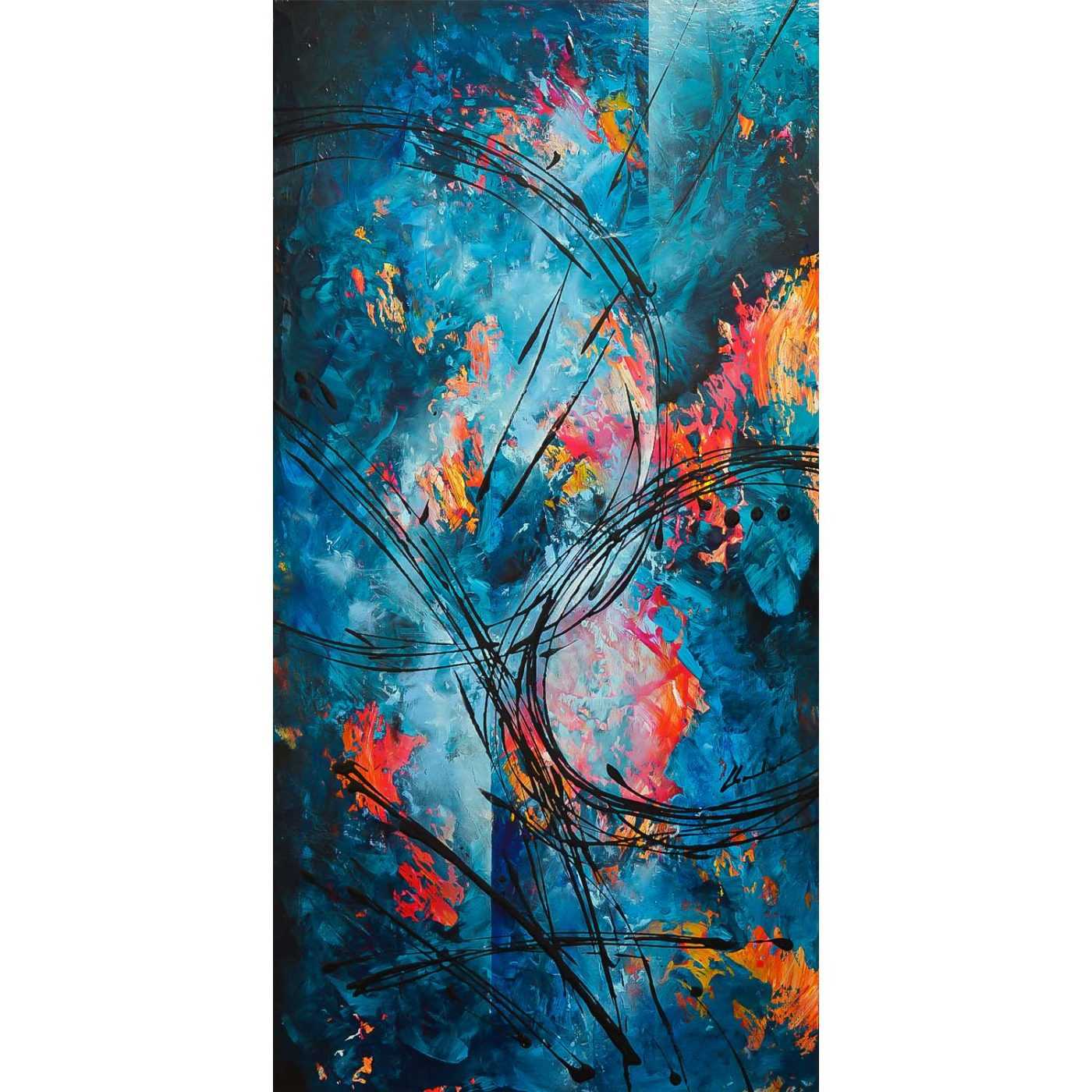
Mes dernières créations
Découvrez mes derniers tableaux abstraits disponibles.









Leave a Reply