
How to use acrylic paint, what to mix it with and what’s best?
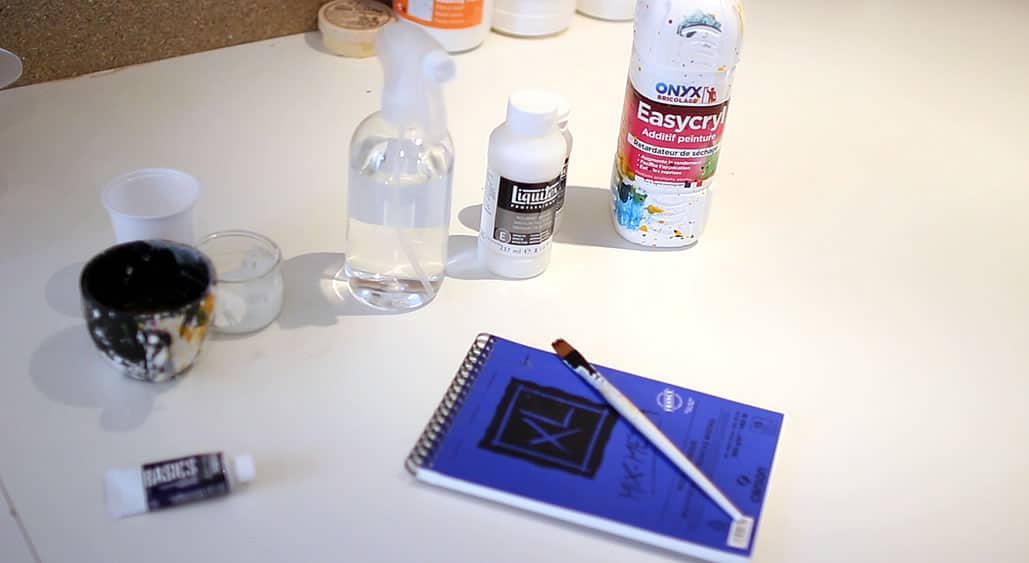
Should acrylic paint always be thinned?
In most cases, I recommend diluting acrylic paint. However, it is possible to use acrylic paint without adding anything.
This is the case, for example, with the Impasto painting technique (click on the link to discover my article on the subject).
How to mix acrylic paint
Dilute acrylic paint with water
Acrylic paint dilutes well with water. In fact, this is the very concept behind this type of paint.
You can also add water to your acrylic paint and apply it after thorough mixing.
Caution: Never use too much water. Manufacturers and experts agree that in most cases the water content should not exceed 50%.
If you add more than 50% water to your acrylic paint, you run the risk of pigment breakdown and, above all, of the paint not adhering properly to the substrate.
If you wish to go beyond 50% water, we recommend using a paint medium to complete the paint’s binder (which is not possible with water alone).
Dilute acrylic paint with a smoothing medium
Like water, a smoothing medium can be used to dilute your acrylic paint. However, it does have a few other advantages.
- It increases fluidity
- Reduces friction (fewer strokes required)
- It is itself composed of a binder (allowing higher dilution rates).
- etc.
Be careful, however, not to fall into the trap of frantically buying every medium you can find.
Many believe that having the maximum number of mediums and materials will make you a true artist. (Buying a Fender Stratocaster US guitar won’t turn me into Jimi Hendrix…)
Acrylic paint : Retarder
Retarder is also a widely used medium that can also be used as a thinner.
Acrylic paint dries very quickly. Some find this an advantage (I do), but others, accustomed to the slow drying inherent in oil painting, may find it frustrating.
Retarder is a medium that slows down the drying of your acrylic paint. If you want to work in a cool environment, you’ll find it easier to come in for touch-ups.

My case: How I dilute acrylic paint.
After producing several hundred paintings, I still use water as a diluent in 95% of cases.
I don’t feel the need to use any specific mediums, and I get the job done with just acrylic paint and water. However, I do try to follow good practice when using acrylics, so as not to have any unpleasant surprises.




Leave a Reply