
For a year, I played along: a monthly subscription, a 50% commission on each sale, and shipping billed by the platform. The goal? To determine, with hard data, whether Singulart could really help me sell my artwork internationally.
The verdict can be summed up in one word: zero.
Zero sales in a year, despite a strong presence and works priced in line with the platform’s pricing strategy. In this article, I’ll tell you exactly what happened, compare it to my own sales on my website, and share a concrete action plan if you’re hesitating to subscribe to a platform.
The Background: Why I Wanted to Try Singulart
For years, I’ve been selling my paintings through my own ecosystem (website, social media, emails). I’ve also tried several “art marketplace” platforms—often disappointing: lots of artists, few truly qualified buyers.
Singulart, with its high marketing profile, seemed different: its positioning, online gallery, support, and international visibility. I decided to give it a year to really assess it.
The business model: where I had my doubts (very) early on
1) 50% commission
Nothing new here: in physical galleries, a 30 to 60 percent commission is common. On paper, that’s acceptable if there’s real value (curation, promotion, sales, logistics, etc.).
2) A monthly subscription…in addition to the commission
Second shock: €29 / €69 / €149 per month. I chose the €69 plan, described as “unlimited works + expert support to advance your career.”

The underlying problem: if you sell, they make money (commission); if you don’t sell, you still have to pay (subscription fee). The risk is shifted onto the artist.
3) Delivery billed by them, but handled without your involvement
Shipping costs are charged by the platform (often several hundred euros for works priced around 1,000 euros), and you have no control over them. Is it all about their reputation? Fine—but that drives up the final price and complicates the sale.
Promises of Visibility: The Gap Between the Pitch and Reality
The press release highlights “2 million visitors per month” and 12,000 artists. When I cross-reference audience estimates (such as those from traffic analysis tools), I get a figure closer to ~800,000 monthly visits. That’s still a lot… but that’s not the main point. (SimilarWeb, SEMrush, etc.)

The real issue: traffic quality.
After a quick audit, I notice that the pages attracting the most visitors are mostly “general knowledge” articles (Picasso, Dalí, art movements, etc.). Lots of curious visitors, few buyers. This is the kind of traffic that can inflate numbers without necessarily leading to conversions.

The support I was promised… and what I actually received
Over the course of a year, virtually no concrete support. Few or no relevant emails. And then there was the “one email too many”: I was asked to create a link (backlink) from my website to my Singulart profile to “boost visibility.”
In SEO, this isn’t a win-win: it mainly boosts their domain. And I ’m already paying for a subscription plus a potential commission— it’s not up to me to provide the SEO authority.

The Numbers: Singulart vs. My Website (Same Time Period)
- Singulart (April 2024 → May 2025): 0 sales
- My website, same period: 79 paintings sold, generating €26,786 in revenue
Summary Table
| Channel | Subscription | Commission | Shipping Costs | Sales (period) | Revenue (period) |
|---|---|---|---|---|---|
| Singulart | 69 €/month | 50 % | Billed by the platform | 0 | €0 |
| My website | 0–low (hosting provider/tools) | 0 % | Handled on a case-by-case basis | 79 | €26,786 |

Is it “because people don’t like my work”?
Maybe… except that 79 sales on my website, within the same time frame, clearly disprove that theory.
My interpretation (and what it reveals)
- Platform = competitive showcase: You’re just one listing among thousands. Without strong curation and effective promotion, you’ll remain invisible.
- Subscription + commission: the platform wins no matter what. You’re the one taking the risk.
- Traffic ≠ buyers: High traffic doesn’t necessarily indicate purchase intent.
- Expensive and unclear shipping: It discourages purchases and undermines your pricing strategy.
- Insufficient support: If “expert support” amounts to nothing more than asking for a backlink, that’s not enough.
So… should we avoid all platforms?
Not necessarily. A platform can be helpful if:
- she carefully selects and highlights content (curation, editorial content, targeted newsletters);
- it brings in buyers (not just “cultural” traffic);
- The total cost is aligned with your margin and pricing strategy;
- You receive real support (feedback, exposure, connections with collectors).
If these boxes aren’t checked, you might end up paying just to “hope.”
What I Recommend Instead (A Concrete Action Plan)
- Have your own website (even a simple one). It’s your storefront—without 12,000 competitors around it.
- Keep an eye on your prices, your expenses, and your messaging. Your brand grows with every visit.
- Learn the basics of communication: social media, email, clear web pages, and artist storytelling.
- Metrics: traffic, referral sources, conversions, abandoned carts, repeat customers.
- Test it, but measure the ROI: if you sign up, set specific, quantifiable goals (e.g., X features per month, X hot leads, X sales within 90 days). If you don’t see results, stop.
- Beware of the “shiny object syndrome ”: if someone promises you magic, tuck your credit card deep in your pocket.
Message to Artists
Never let a platform make you doubt your talent.
If you’re not selling there, it doesn’t mean “you’re worthless”—it means “you haven’t (yet) found your audience on that channel.” Keep going, align your work and your messaging, and create your own opportunities.
FAQ
Is Singulart “one to avoid”?
I’m sharing my experience and my numbers. Some people might have good results. My takeaway: high cost, little support, and no sales in 12 months.
Is the subscription fee plus commission a deal-breaker?
Not if the value provided is exceptional (curation, sales, network). Otherwise, the risk falls too heavily on the artist.
Is the platform’s traffic sufficient?
No. What matters is the intention to buy and the effective promotion of your work.
Where do I start if I don’t have a website?
A simple website (web host + custom theme), a “Shop” page, an “About” page, high-quality photos, a contact form, and a payment option. Then, communicate regularly.
Conclusion
I would have loved to end this article with “Singulart opened the door to the international market for me.” The reality is that I’ve made zero sales, despite having a subscription and a business model designed to capitalize on artists’ hopes.
In contrast, my own storefront —imperfect but sincere, well-managed, and built up over time —generated 79 sales and €26,786 over the same period.
The moral of the story: build your own ecosystem. Test, yes, but measure, and quickly take back control if the results don’t live up to expectations.
What about you? What has your experience with Singulart been like?
Please share your testimonial below.
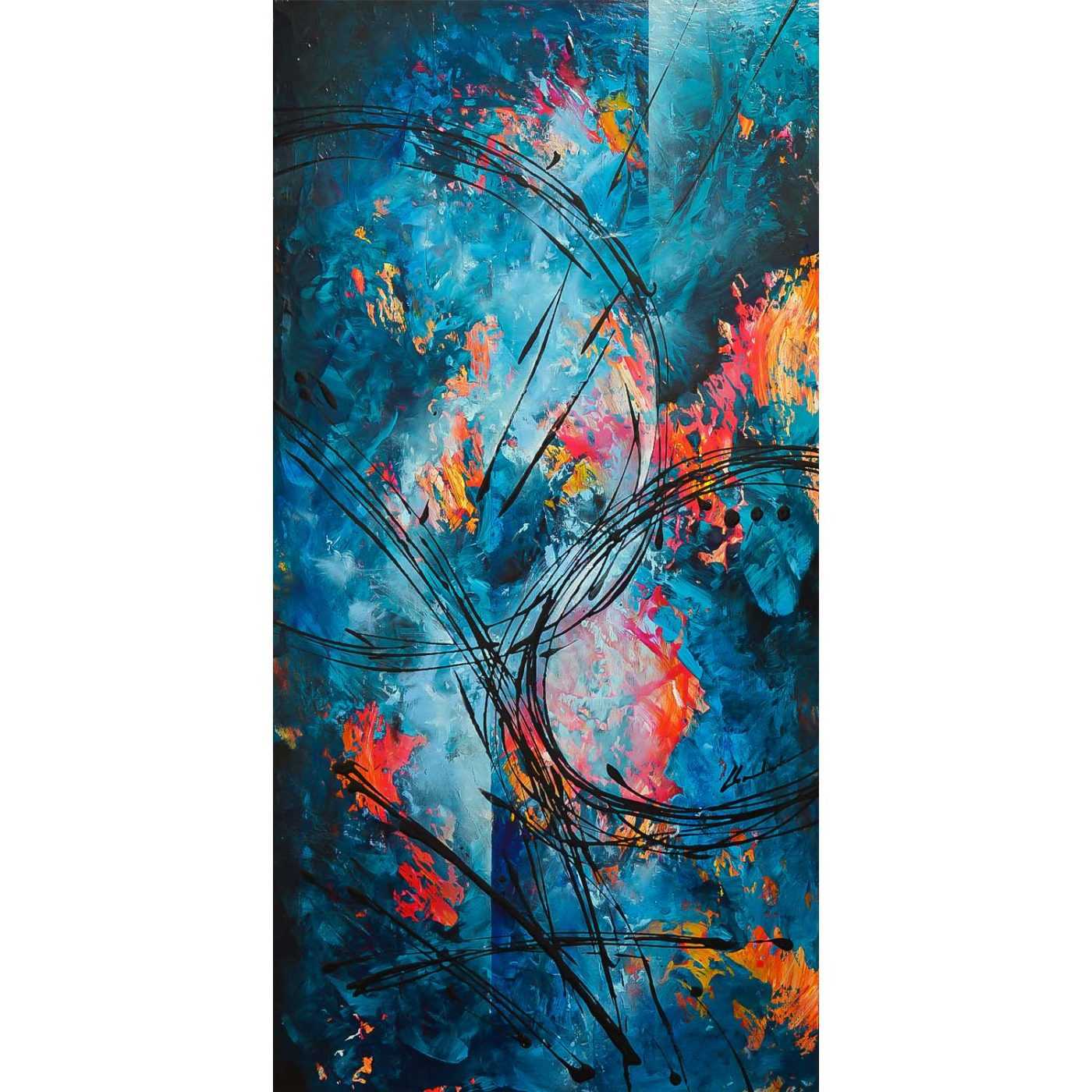
Mes dernières créations
Découvrez mes derniers tableaux abstraits disponibles.









Leave a Reply