
“I don’t understand abstract art.”
That’s probably one of the things I hear most often.
When looking at an abstract painting, many people immediately search for something recognizable: a figure, a landscape, an animal, a familiar shape… And when nothing stands out clearly, a sense of frustration can set in.
But what if the problem stemmed precisely from this desire to understand?
Abstract painting isn’t necessarily something to be viewed as a puzzle to be solved. It can simply be experienced and felt.
And that is exactly what I would like to discuss in this article.
Perhaps there is nothing to understand in an abstract painting
When we look at a figurative painting, our brain immediately has points of reference.
We recognize a face, a tree, a house, a landscape… We can identify the subject and begin to build a story around it.
In abstract painting, these points of reference disappear to some extent.
And that is precisely what makes it so powerful.
When looking at an abstract work of art, you might focus on the colors, contrasts, movement, textures, depth, tones, or simply the overall impression the painting conveys.
You don’t necessarily need to ask yourself:
“What did the artist intend to depict?”
The best question might be:
“How does this painting make me feel?”
That is a fundamental difference.
Feel rather than analyze
We naturally tend to want to make sense of what we observe.
We want to understand, identify, and classify.
Yet some artistic endeavors work perfectly well without undergoing this analysis.
Choose a piece of instrumental music.
You can be deeply moved by a piece of music without being able to explain exactly why. A chord, a musical crescendo, or just a few notes can give you goosebumps.
You aren’t necessarily trying to translate every note into a concept.
You feel it.
To me, abstract painting can work in exactly the same way.
A combination of colors, a certain light, a sense of depth, or a movement can stir something within you without the need for an explanation.
But abstract painting doesn’t mean “just doing whatever you want.”
This is probably one of the biggest misconceptions about abstraction.
Since there isn’t necessarily an identifiable subject, some people think:
“In the end, all you have to do is throw paint on a canvas.”
Of course, some artists rely heavily on chance, gesture, or splatter. And even a simple paint splatter can certainly evoke an emotion.
But that’s not how I work.
In my practice, there are a great many decisions behind every abstract painting.
In particular, I work on:
- color harmonies;
- the composition;
- values;
- contrasts;
- saturation;
- the depths;
- transitions;
- the glazes;
- the different layers of paint;
- work with a knife and a brush;
- scraping and material removal.
When you look at the finished painting, all you see is the result.
But behind certain forms that seem spontaneous, there is sometimes a great deal of research, revisions, and fine-tuning.
Abstraction, therefore, is not necessarily the absence of technique.
On the contrary, it can require true mastery to successfully convey an emotion without relying on an immediately recognizable subject.
Why do you see faces, animals, or figures in abstract paintings?
It’s something that happens to me all the time.
We’re looking at one of my paintings, and someone says to me:
“I see a horse’s head!”
“Look, I see a phoenix!”
“Look, there’s a face!”
“I see a dancer!”
And sometimes I just reply:
I definitely didn’t paint that!
This phenomenon has a name: pareidolia.
This refers to our tendency to recognize familiar shapes in objects that were not necessarily created to represent them.
The classic example is that of clouds.
You look up at the sky, and suddenly:
“Look, it looks like a dog!”
Someone else might see a face or a dragon in that exact same cloud.
The same thing can happen when looking at an abstract painting.
Your brain looks for points of reference and connects certain shapes to things it already knows.
Should we prevent viewers from interpreting a work of art?
Of course not.
Everyone is free to view a painting however they wish.
If someone sees a horse in one of my paintings and that interpretation brings them joy, that’s fine.
But personally, I sometimes think it’s a shame to stop there.
Because if it was absolutely not my intention to paint a horse, trying to analyze the quality of this famous horse doesn’t make much sense anymore.
We then risk missing out on the most interesting aspects that abstraction has to offer:
an emotion that, in fact, doesn’t need to be translated into an object or a story.
Try, every now and then, to look at an abstract painting without immediately searching for something recognizable.
Just take a look.
Let the colors come.
Look into the depths.
Notice how your gaze moves.
Above all, pay attention to how you feel.
Also, be careful not to read too much into colors
There is another trend that really bothers me: the insistence on attributing a psychological meaning to every element of a painting.
Let’s take the red one.
Some people will immediately associate it with blood, violence, anger, or the artist’s inner suffering.
But why?
Red can also evoke love.
Passion.
Power.
Poppies in a field.
Positive energy.
Or simply… a really beautiful color!
A color obviously has visual characteristics. A deep red is highly eye-catching and can become a dominant element in a composition.
But that doesn’t automatically mean that the artist is trying to express something violent.
We should be wary of ready-made interpretations.
A work of art can evoke a certain response in you without that emotion necessarily matching the creator’s intention.
What you see in a painting says something about you, too
That’s actually something I find fascinating.
Two people can look at the exact same painting and feel completely different things.
One might see something powerful and luminous in it.
The other one is something dark.
A third person might simply appreciate the colors.
A fourth person might not feel anything at all.
And that’s perfectly normal.
Your personal history, your sensibilities, your current mood, and your own frame of reference all influence your perception.
That is also why I remain cautious when someone claims to be able to explain an artist’s psychology with certainty simply by looking at his or her paintings.
An interpretation sometimes says as much about the viewer as it does about the artist.
My Introduction to Abstract Painting
I completely understand people who say to me:
“I don’t understand abstract art at all.”
Because I, too, may have had that reaction in the past.
Then one day, I came across an abstract painting that left a deep impression on me.
I didn’t try to figure out what she stood for.
I didn’t look for any hidden characters.
Something just happened.
A connection.
An extremely powerful emotion.
And that experience changed the way I look at abstract painting.
Above all, she gave me an irresistible urge to paint.
Since then, abstraction has become, for me, a field of exploration with virtually no limits.
Abstract art is not a step toward figurative art
I also sometimes hear this idea:
“Now that you’re doing abstract art, the next step will be to do figurative art.”
As if there were a set sequence:
abstract → figurative → true artist.
That doesn’t make any sense to me.
There is no single way to be an artist.
I’ve already experimented with figurative art. I could keep doing it if I wanted to.
But these days, it’s abstraction that fascinates me.
I like this partial loss of control.
I like to start with almost nothing, develop an idea, gradually build a world, and use my technical skills to fine-tune the composition as I go.
Above all, I love that freedom.
The playground is huge.
“My 3-year-old can do the same thing.”
Ah… abstract painters are very familiar with that one, too!
On social media, comments can sometimes be particularly blunt:
“My son is doing better.”
“That’s not art.”
“It’s not even worth hanging in my bathroom.”
Or:
“You’re not an artist; you’re a decorator.”
Over time, I’ve learned to take this kind of comment much less to heart.
Well-reasoned and constructive criticism can be valuable.
But when someone is simply trying to hurt you, it’s often best to keep your distance… and sometimes just laugh it off.
Creating also means accepting that not everyone will connect with what you do.
You don’t have to please everyone
This is probably one of the most important messages I’d like to convey to the artists reading this.
Your painting will never please everyone.
And thank goodness!
To date, I’ve sold more than 800 paintings, and that has taught me something essential: there are people who connect deeply with my world, and others who don’t at all.
That’s normal.
You don’t need everyone who discovers your work to like it.
You need to expand your worldview, your sensibility, and your way of expressing yourself.
Little by little, some people will see themselves reflected in what you create.
So, how do you look at an abstract painting?
The next time you find yourself looking at an abstract work of art, try something.
For a few seconds, forget about the question:
“What does that mean?”
Don’t immediately look for a face, an animal, or a landscape.
Instead, pay attention to your reaction.
Where is your gaze directed?
Which color appeals to you?
Would you like to get closer?
Does the painting calm you?
Does it give you energy?
Does it leave you completely indifferent?
There is no right answer.
And most importantly, you don’t need to come up with a complicated explanation to justify how you feel.
Sometimes:
“This painting moves me, and I don’t know why.”
is probably one of the most interesting reactions one can have to an abstract work of art.
Abstract painting is, above all, an experience
Ultimately, my view of abstract painting is quite simple.
I’m not necessarily trying to tell a specific story or to hide symbols that need to be deciphered.
I’m looking to create a visual experience.
Colors that come alive together.
From the depths.
Movements.
Contrasts.
An atmosphere.
And, with a little luck, something happens within the viewer.
A sense of well-being.
So much energy.
A memory.
A shiver.
A feeling.
That’s what I’m looking for when I paint.
So if you create abstract art yourself, don’t let people who “don’t understand” your work stop you from moving forward.
Express yourself in your own way.
Work on your technique, develop your own style, and above all, strive to create something that moves you.
Because when it comes to abstract painting, maybe there’s nothing to understand after all…
but so many things to experience.
What about you?
When you look at an abstract painting, do you need to recognize something in it? Do you often see faces, animals, or figures in the shapes?
Or are you able to look at a work of art solely for the emotions it evokes in you?
I’d be curious to hear your thoughts in the comments.
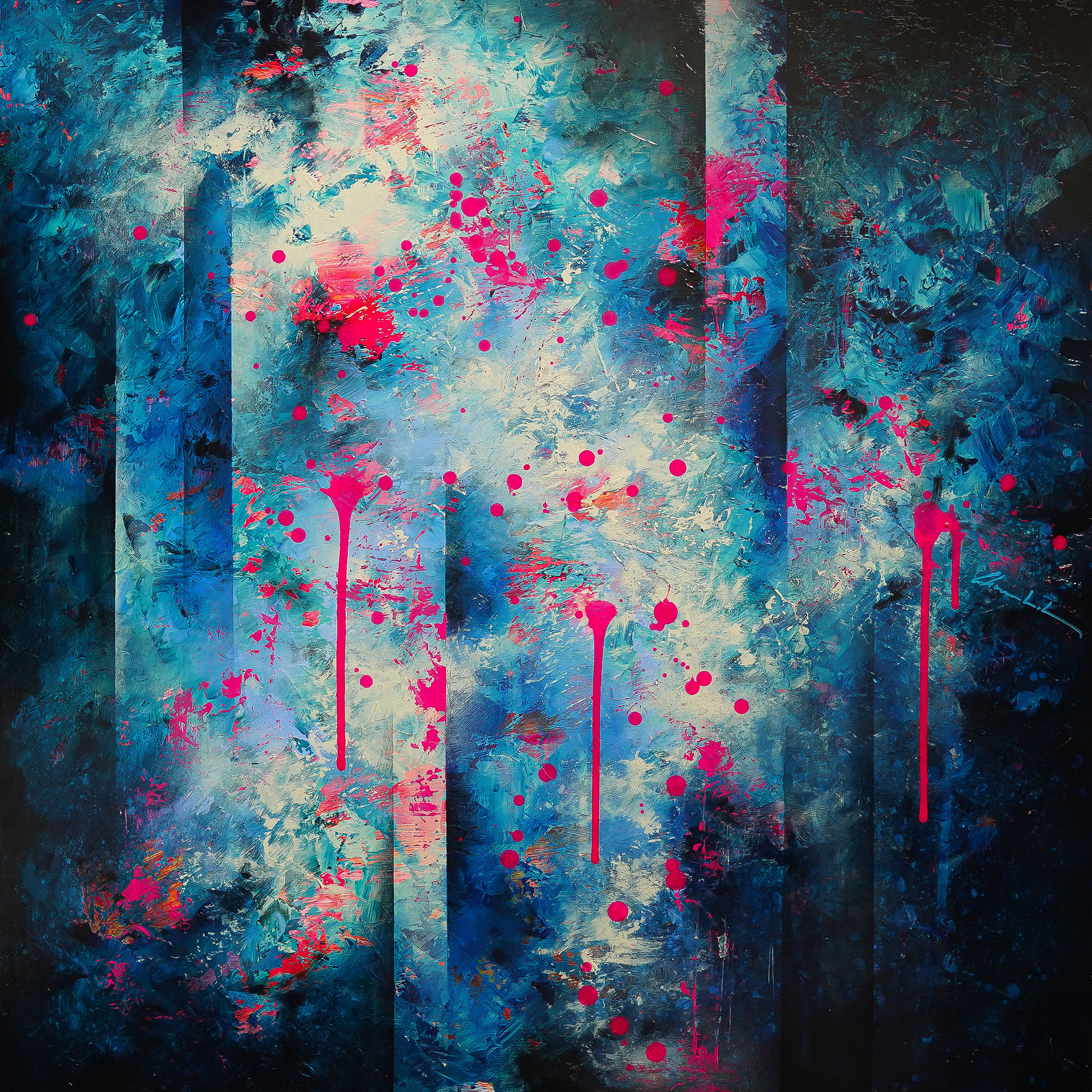
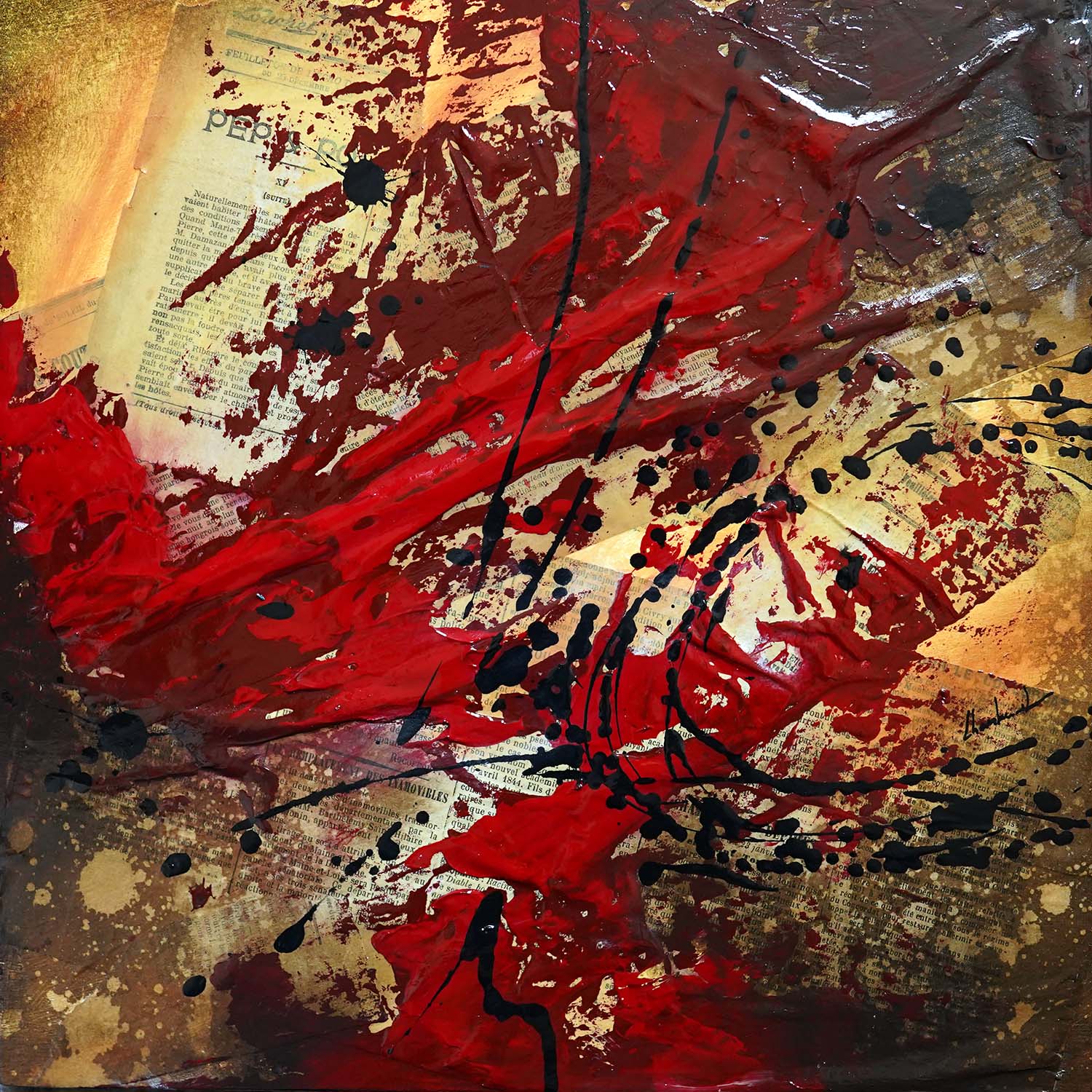
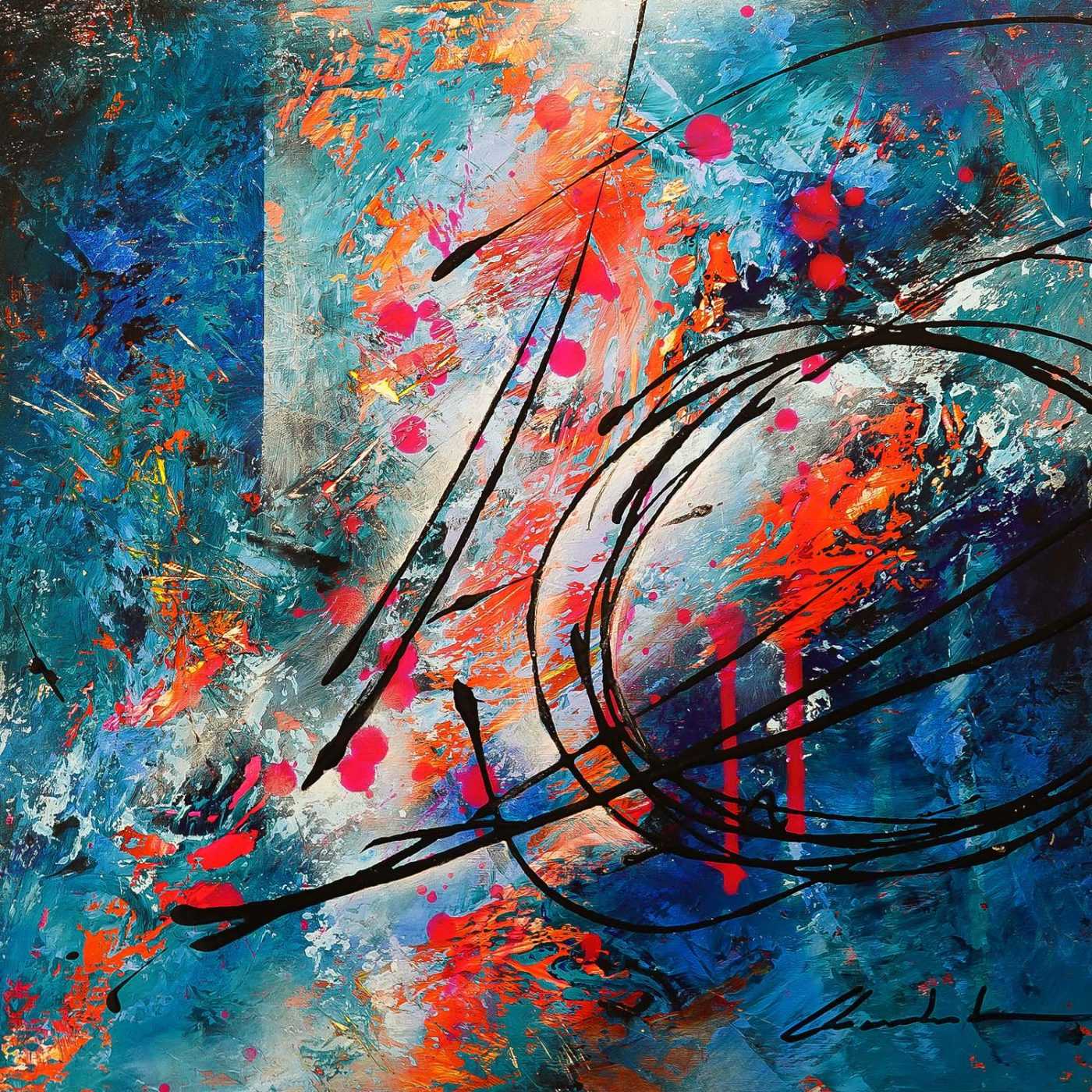
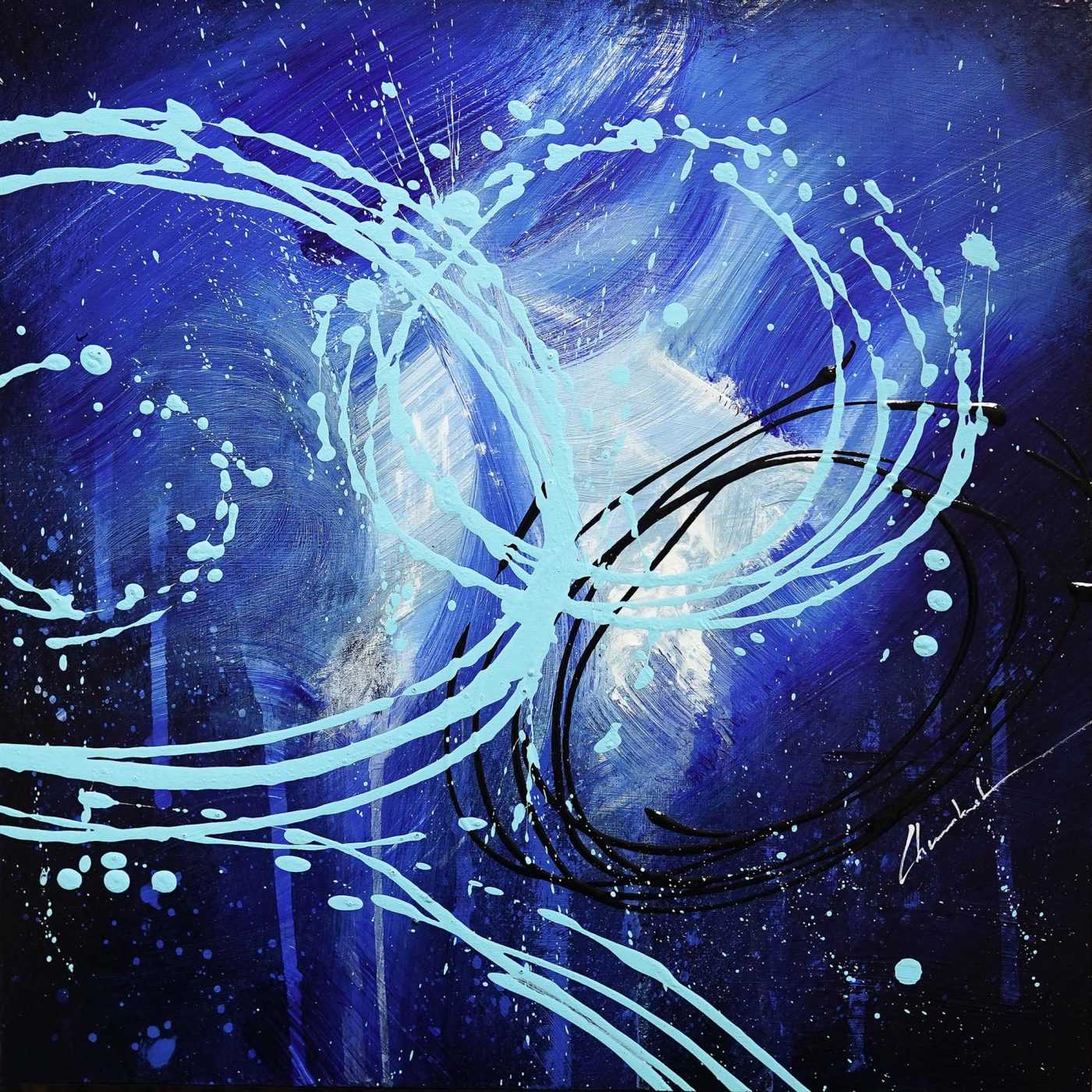
Mes dernières créations
Découvrez mes derniers tableaux abstraits disponibles.







Leave a Reply